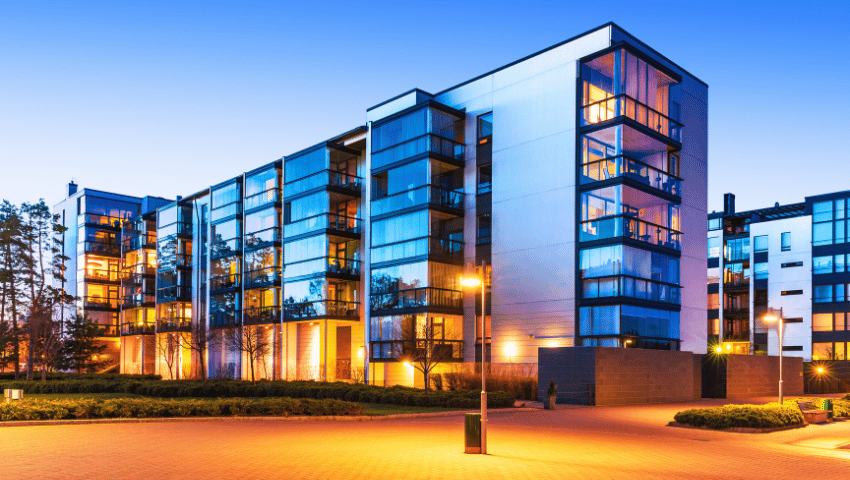


If you’ve driven through Quincy Center lately, you already know something is happening. Cranes over the skyline, new retail storefronts filling in old gaps, and a steady stream of “For Lease” signs turning into “Leased” signs almost as fast as they go up. For anyone tracking commercial real estate in Quincy, MA, the city has quietly become one of the more interesting stories on the South Shore — and investors who are paying attention are asking the right question: is now the time to buy in?
At Lee Brokers, we spend our days walking these streets, touring these buildings, and talking to the landlords, tenants, and investors who are shaping this market in real time. This guide breaks down what’s actually happening with commercial real estate trends in Quincy, MA, where the opportunity is strongest, and what any serious investor should know before writing an offer.
Why Quincy Is Attracting Commercial Investors Right Now
Quincy has always had good bones. It’s the largest city on Boston’s South Shore, it sits directly on the MBTA Red Line, and it’s wedged between two major highway corridors — I-93 and Route 3 — that give tenants and customers easy access to the entire metro area. What’s changed is that investors who used to overlook Quincy in favor of pricier Boston and Cambridge submarkets are now actively hunting here.
A few forces are driving that shift:
- Boston spillover. As office and lab space in Boston and Cambridge has gotten more expensive and harder to find, tenants — and the investors who serve them — have started looking south. Quincy offers proximity without downtown Boston pricing.
- Transit access. Three Red Line stops (Wollaston, Quincy Center, and Quincy Adams) put commercial properties within a short, direct ride of South Station. For office and retail tenants, that’s a real competitive advantage over suburbs that depend entirely on cars.
- A city actively investing in itself. Quincy’s downtown redevelopment has brought new residential density, new retail, and new foot traffic into what used to be a fairly sleepy city center. More rooftops nearby means more customers for retail and service tenants, which in turn makes ground-floor commercial space more valuable.
- Relative affordability. Compared to Boston, Cambridge, or even Braintree in some pockets, Quincy commercial property still trades at a discount on a price-per-square-foot basis. That gap is part of why cap rates in Quincy tend to look more attractive to yield-focused buyers than what’s available closer to downtown Boston.
Office Space: Smaller Footprints, Smarter Buildings
The office story in Quincy mirrors what’s happening nationally, just at a more manageable scale. Large, generic office blocks are struggling. Well-located, well-amenitized buildings with parking, transit access, and flexible floor plans are leasing steadily.
Tenants relocating out of Boston are often looking for the same square footage at a lower cost, or the same cost for meaningfully more space. Quincy delivers both. We’re also seeing more interest in smaller suites — 1,500 to 5,000 square feet — as professional services firms, medical groups, and satellite offices right-size their footprints post-pandemic.
For investors, this means office buildings with flexible layouts and the ability to subdivide floors are outperforming rigid, single-tenant buildings. If you’re evaluating an office acquisition in Quincy, ask how easily the space can be reconfigured — that flexibility is becoming as important as location.
Retail Real Estate: Filling In Around Foot Traffic
Retail in Quincy has benefited enormously from the residential growth downtown. New apartment and condo development around Quincy Center has created a built-in customer base that didn’t exist a decade ago, and retail landlords have responded by attracting restaurants, cafes, grocery-adjacent concepts, and personal services rather than the big-box formats that once defined South Shore retail.
Neighborhood and strip retail along Hancock Street, Washington Street, and the Southern Artery corridor continues to perform well, especially for tenants serving daily needs — nail salons, dry cleaners, quick-service restaurants, pharmacies, and fitness studios. These uses are less exposed to e-commerce competition and tend to sign longer leases, which makes them attractive to investors looking for stable, income-producing retail assets.
Marina Bay also deserves a mention. Its waterfront restaurants and entertainment venues give it a different character than the rest of Quincy’s retail landscape, and it continues to draw both local traffic and destination visitors from across the South Shore.
Industrial and Flex Space: Quietly One of the Tightest Markets
If there’s one property type in Quincy that investors consistently underestimate, it’s industrial and flex space. Warehouse, distribution, and light-manufacturing product close to Boston has become increasingly hard to find, and Quincy’s location — close to the highway network and the Port of Boston — makes it a natural fit for last-mile logistics, contractor space, and small-bay industrial users.
Vacancy in this segment tends to run tighter than office or retail, and well-located industrial buildings often lease quickly once they hit the market. For investors comfortable with a less glamorous property type, industrial and flex assets in Quincy have delivered some of the more consistent returns in the local commercial market.
Mixed-Use Development Is Reshaping the City Center
Quincy’s downtown revitalization is arguably the single biggest story in the city’s commercial real estate market. What was once a collection of aging, underused parcels around Quincy Center has been transformed into a genuine mixed-use district — apartments, retail, office, and public space woven together in a way that’s designed to keep people downtown longer.
For investors, this matters beyond the buildings actually being redeveloped. Mixed-use growth tends to lift surrounding property values, increase retail rents, and create demand for supporting commercial uses — parking, services, and smaller retail bays — that wouldn’t have penciled out a decade ago. If you’re looking at commercial property anywhere within walking distance of the downtown core, it’s worth understanding how the broader redevelopment plan might affect your asset over the next five to ten years.
Pricing, Cap Rates, and What Investors Are Actually Paying
Pricing in Quincy’s commercial market varies significantly by property type and location, but a few patterns hold across most deals:
- Cap rates in Quincy generally run higher than comparable Boston or Cambridge assets, reflecting both the location discount and the slightly higher perceived risk of a secondary market — even one this well-connected.
- Well-leased, stabilized assets command a premium. Buyers are paying up for buildings with strong, in-place tenancy and minimal near-term lease rollover, and discounting properties with vacancy or upcoming lease expirations.
- Smaller deals move faster. Properties under roughly $2–3 million tend to attract a deep pool of local and regional buyers, which keeps that segment competitive. Larger institutional-scale assets see fewer bidders but often larger price swings when they do trade.
If you’re underwriting a deal in Quincy right now, it pays to look closely at the tenant roster, remaining lease term, and any planned capital improvements before anchoring to a cap rate you saw on a comparable sale — no two buildings in this market are priced quite the same way.
Risks and Challenges Investors Should Watch
No market is without risk, and Quincy is no exception:
- Interest rate sensitivity. Like every commercial market, deal volume and pricing in Quincy remain closely tied to financing costs. Investors underwriting new acquisitions should stress-test their returns against a range of rate scenarios, not just today’s numbers.
- Zoning and permitting timelines. Quincy’s redevelopment success has come with more scrutiny on new projects. Investors planning to redevelop or reposition a property should build extra time into their timeline for permitting and community review.
- Uneven neighborhood performance. Not every corridor in Quincy is benefiting equally from the city’s growth. Properties directly connected to transit and the downtown core tend to outperform those in more isolated pockets of the city.
- Aging building stock. A meaningful share of Quincy’s commercial inventory was built decades ago. Buyers should budget realistically for deferred maintenance, code upgrades, and system replacements, especially in older office and industrial buildings.
Why Local Expertise Matters in a Market Like This
Quincy’s commercial real estate market rewards people who know it block by block — which landlords are motivated, which corridors are about to turn, which buildings have hidden upside, and which deals only look good on paper. That kind of insight doesn’t come from a database search; it comes from being in the market every day.
That’s the role Lee Brokers plays for our clients. Whether you’re evaluating your first commercial acquisition in Quincy or expanding a portfolio you’ve built over years, we help investors cut through the noise, evaluate deals honestly, and move quickly when the right opportunity shows up.
Frequently Asked Questions
Is Quincy, MA a good market for commercial real estate investment? Yes. Quincy combines Red Line transit access, highway connectivity, and a growing downtown population with pricing that’s still more accessible than Boston or Cambridge, making it attractive to both yield-focused and growth-focused investors.
What type of commercial property performs best in Quincy right now? Neighborhood retail with daily-needs tenants and industrial/flex space near the highway network have both shown consistent demand, though well-located office space with flexible layouts is also finding steady tenant interest.
Are cap rates higher in Quincy than in Boston? Generally, yes. Quincy cap rates tend to run higher than comparable Boston or Cambridge properties, reflecting its status as a secondary market despite strong transit and highway access.
What’s driving Quincy’s commercial real estate growth? A combination of downtown mixed-use redevelopment, rising residential density, spillover demand from pricier Boston submarkets, and strong transportation infrastructure is fueling growth across office, retail, and industrial sectors.
How do I find off-market commercial deals in Quincy, MA? Working with a locally based brokerage like Lee Brokers gives investors access to relationships with property owners and early insight into deals before they’re broadly marketed.
The Bottom Line
Quincy has moved from an overlooked South Shore city to one of the more closely watched commercial real estate markets near Boston, and the fundamentals behind that shift — transit access, downtown investment, and comparative affordability — aren’t going away anytime soon. For investors willing to do the homework on individual buildings and corridors, Quincy offers a rare combination: growth potential with pricing that still leaves room to win.
If you’re evaluating commercial property in Quincy, MA, or thinking about where to place your next investment on the South Shore, Lee Brokers is ready to walk the market with you — building by building, deal by deal.
Ready to explore commercial real estate opportunities in Quincy, MA? Contact Lee Brokers today to speak with a local expert.